 120 Clifford St, Stafford Heights QLD 4053
 (07) 3472 9108
Polycystic Ovary Syndrome (PCOS) is a common hormonal disorder that affects millions of women worldwide and up to 20% of females of reproductive age. It is a condition that impacts the reproductive system and can cause a range of symptoms that affect a woman’s overall health, wellbeing, and fertility.
It is not always easy to tell if you have PCOS. Because every woman presents different symptoms and not everyone has heard of the condition, up to 75% of women with PCOS are undiagnosed. At Nurture Gynaecology, we believe in the importance of educating women about the symptoms of PCOS, therefore empowering them to seek professional support if they regularly experience discomfort or severe period pain.
In this blog post, we’ll unpack 5 of the most common PCOS symptoms to look out for while on your period, including:
- Absent or irregular periods
- Heavy periods
- Painful periods
- Weight gain
- Excess body hair or oily skin
Let’s take a closer look.
Absent or Irregular Periods
Although it can be completely normal to experience irregular periods during the first few years of menstruation, many women with PCOS may have cycles that are longer than 35 days or absent altogether. This is opposed to an average menstrual cycle, which typically lasts between 21-35 days with bleeding lasting 2-7 days.
Irregular periods are usually due to hormonal imbalances that can prevent the ovaries from releasing eggs regularly. If you’re unsure about how regular your menstrual cycle is, try tracking it using an app or notebook.
Heavy Periods
Women with PCOS are also likely to experience heavy bleeding while on their period. This is usually due to two major reasons.
Firstly, irregular or absent periods may cause a build-up of endometrial lining, leading to a heavier flow when menstruation does occur. Secondly, it can be because of hormonal inbalances — usually higher levels of oestrogen and androgen — that lead to a thickening of the endometrial lining and heavy bleeding.
Although many women consider heavy periods ‘normal,’ it is important to consult a professional if you are experiencing painful periods as a direct consequence. An underlying condition like PCOS may be to blame.
Painful Periods
One of the most common symptoms of PCOS is severe period pain, including pelvic pain and menstrual cramps. This can be due to several factors.
Firstly, PCOS period pain can be caused by ovarian cysts. Ovarian cysts are fluid-filled sacs that develop on the ovaries due to hormonal imbalances that prevent the ovaries from releasing eggs regularly. When the cysts grow larger or rupture, they can cause sharp, severe pain during menstruation which may also be felt in the back or lower abdomen, explaining why women with PCOS may experience cramping and more extreme period pain than average.
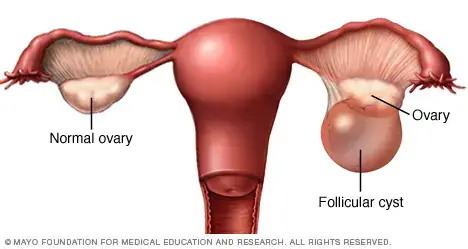
Image source: https://www.mayoclinic.org/diseases-conditions/ovarian-cysts/symptoms-causes/syc-20353405
Secondly, heavy bleeding as a result of irregular or absent cycles can cause painful periods. This is because the heavier flow causes the uterus to contract to expel the excess lining, increasing inflammation in the pelvic area and therefore causing painful periods.
Of course, PCOS is not ‘one-size-fits-all.’ Some women experience mild discomfort only, and don’t necessarily need more than a hot water bottle to treat period pain.
Weight Gain
Over time, women with PCOS may notice they’ve gained weight or have difficulty losing weight. This is generally due to hormonal imbalances, including high levels of androgen, that disrupt the body’s metabolism and cause weight to stick around the abdomen and upper body.
Weight gain may also occur as a result of insulin resistance. Insulin resistance is when the body has trouble processing glucose and stores more fat than usual, and is very common in women with PCOS. Noticing unusual changes in weight or body composition over time, particularly in the midsection, can be an indicator of having Polycystic Ovary Syndrome.
Excess Body Hair & Oily Skin
Excess hair growth and oily skin or acne are also symptoms of PCOS. Once again, this is caused by extreme hormone imbalance across the board.
More specifically, higher levels of androgen hormones can cause an increase in sebum production, which increases oil production in the skin and can lead to acne if not managed. Similarly, excess androgen hormones can cause hirsutism, a condition in which women develop excessive hair growth on the face, chest, and back.
Around their period, women with PCOS may notice singular long or thick hairs growing in strange places, or more inflamed facial acne than usual.
Seek Professional Support For PCOS
Symptoms of PCOS will vary greatly for every woman, and so will managing those symptoms over time.
If you are experiencing any of the signs described above or are worried about other symptoms, we recommend speaking to a female gynaecologist to receive a diagnosis and discuss how to feel comfortable while on your period. It could involve lifestyle changes, such as a more healthy diet, or medications and/or hormonal birth control.
If you have any questions or are ready to find a treatment path that suits you, book an appointment today. Nurture Gynaecology is an all-female practice with years of experience in gynaecology and women’s health.